Graphene from waste plastic. Solar comes first.
Tansotec is an Australian graphene start-up. It turns unsorted waste plastic into graphene, and its first application is a coating for silicon solar cells.
See the projectsPlastic goes to landfill. Solar cells waste energy.
Plastic waste that ends up in landfill poses environmental and health risks, in Australia and around the world.
Meanwhile, silicon solar cells lose some of their energy at their surface, where electric charges recombine.
The RMIT project asked whether one problem could help with the other: could unsorted plastic waste become a material that makes solar cells work better?
Tansotec grew out of RMIT research
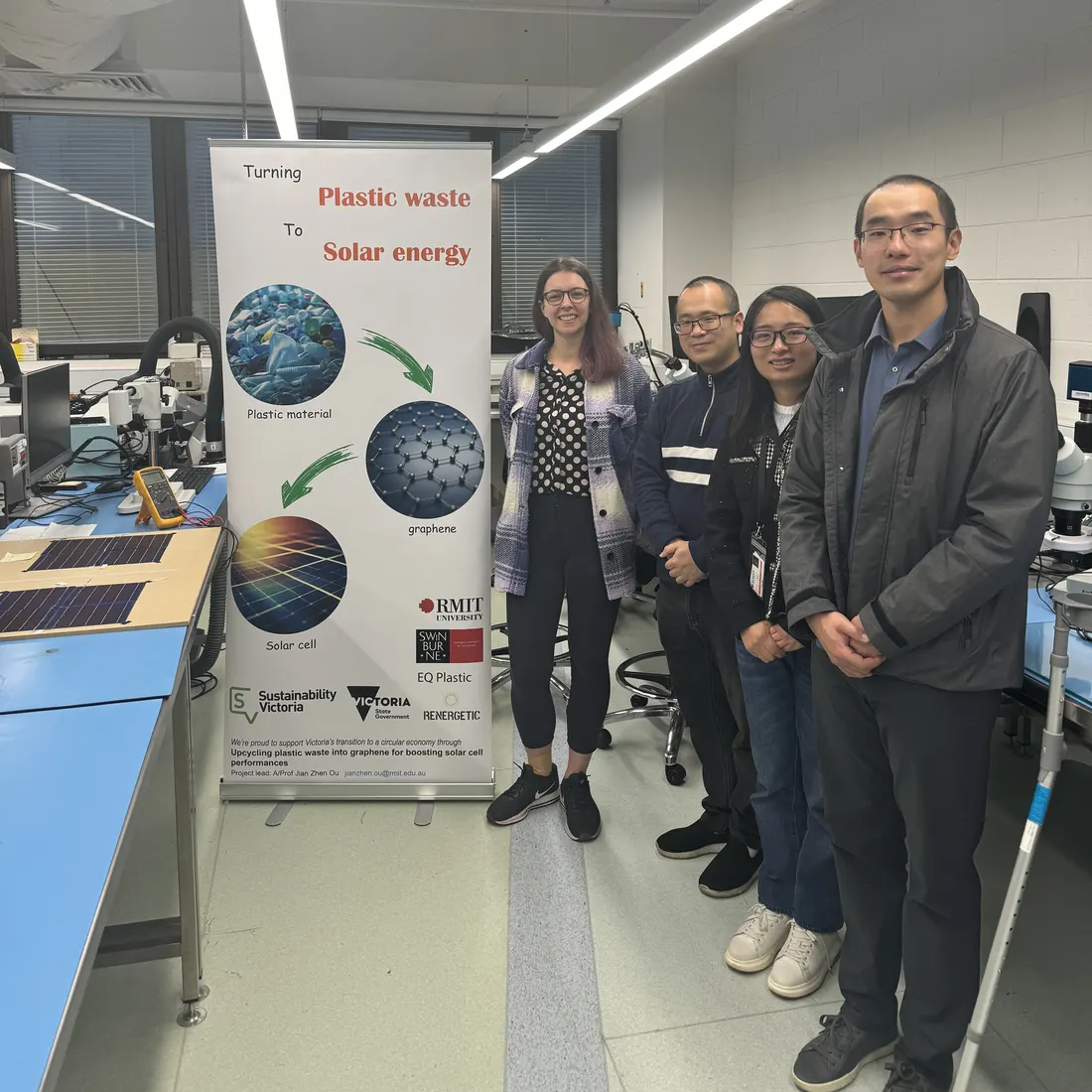
An RMIT University project, funded by Sustainability Victoria, turned mixed plastic waste into graphene and used it to improve commercial silicon solar cells. Tansotec spun out of that research to take it forward.



Partners and funders





Also EQ Plastics, a Victorian plastic recycling company. What each partner did is listed with its project on the Projects page.
Beyond solar
Graphene and its derivatives are important materials for electronics, optics and sensors. For Tansotec these are possible future uses. Solar cells are its only current application.